









| Wim Heldens |
|
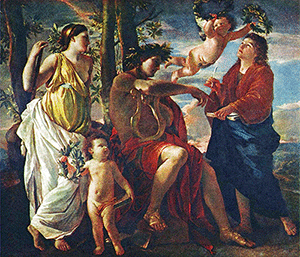
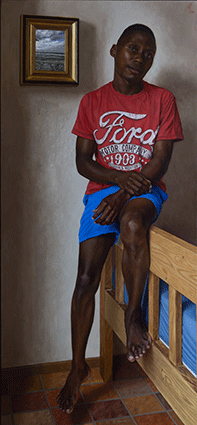
The refugee as muse Amazement at the artist’s inventiveness already existed in ancient Greece: where does it come from? Why are artists so different from ordinary people, what is the source of their ideas? This is how the myth of the muses was born: goddesses who inspired artists with their ideas. While the god Apollo was regarded as the god of the arts, among other things, it was the muses who were responsible for the performing work. Inspiration was conceived as something that came from outside, something superhuman. In later Christian times, the source of inspiration was located in God, and also in a person, it symbolized the inspiring power that the artist’s work actually gave. This person had a symbolic function, as a ‘representative’ of the ‘higher’, who could accept a concrete form through the artist so that the world could be understood through the door. A good example of this line of thought is Poussin’s early masterwork: ‘The Inspiration of the Poet’, in which Apollo rightly ‘dictates’ the artist, assisted by one of the muses and aided by some putti. The Amsterdam realist Wim Heldens often stages scenes in his work that depict symbolic situations of the modern multicultural society that the Netherlands has become. This part of his work is determined by a humanistic vision in which the humanity of ‘the other’ is central, and where the ‘underdog’ in particular is elevated to a central symbol of humanity, in which the viewer can recognize the common rather than ‘ the other’, the ‘strange’. His efforts - in the real world - to rescue a young African from an impossible situation of bitter, hopeless oppression and persecution, led to a series of canvases in which the ‘excluded’ becomes a symbol of all those disadvantaged by circumstances and societies; In this way, an ‘outcast’ became the muse of an artist who, through many different representations, wants to draw attention to the vulnerability and humanity of refugees, asylum seekers, discriminated people - who have not had the opportunity for a dignified existence and deserve respect like everyone elseIn this way, the ancient function of the inspiring muse has been revived in the context of the modern world, in which the human element is all too quickly forgotten. John Borstlap, 2024.
|
|||
|
 |
 |
|||
 |
 |
geopend op (14-18 uur): |
vr 18 september
za 19 september zo 20 september vr 25 september za 26 september zo 27 september vr 2 oktober za 3 oktober zo 4 oktober vr 9 oktober za 10 oktober zo 11 oktober vr 16 oktober za 17 oktober zo 18 oktober vr 23 oktober za 24 oktober zo 25 oktober vr 30 oktober za 31 oktober zo 1 november vr 6 november za 7 november zo 8 november vr 13 november za 14 november zo 15 november vr 20 november za 21 november zo 22 november opening expositie vr 27 november za 28 november zo 29 november
| ||

| ||
 |
||